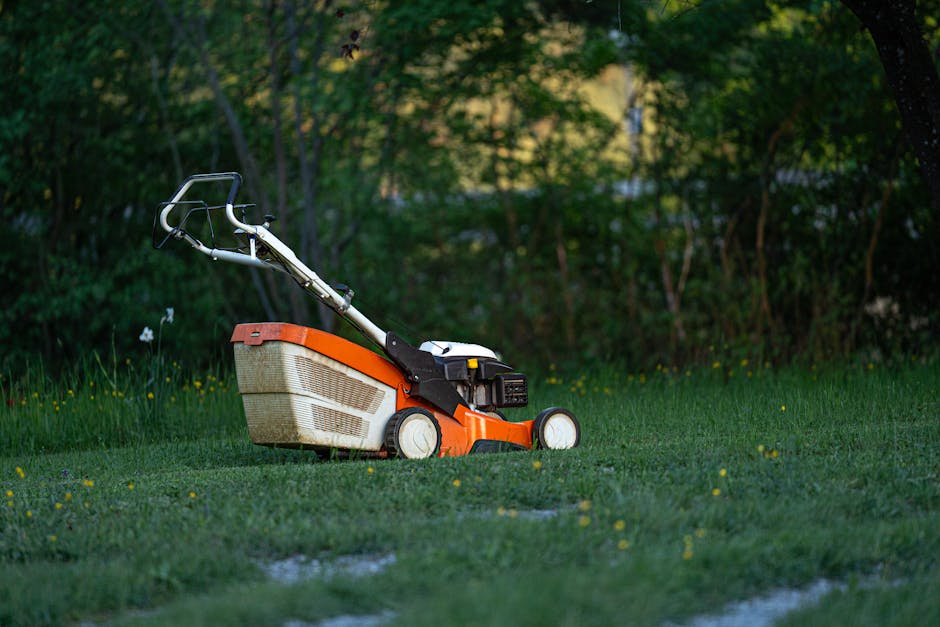
Gardeners for Yeading back alleys and tight access jobs
Back alleys, side passages, narrow gates, awkward steps, shared access ways and tiny courtyard entrances can turn a simple garden job into a proper puzzle. If you are looking for Gardeners for Yeading back alleys and tight access jobs, you probably already know the kind of challenge involved: tools that do not quite fit, wheelbarrows that cannot turn, overhanging branches brushing your shoulder, and a job that looks small from the street but feels twice the size once you get inside. Truth be told, that is exactly where experienced local gardeners earn their keep.
This guide explains how tight-access gardening work is planned, carried out and finished properly in Yeading. You will learn what makes these jobs different, what a good team looks for before starting, and how to avoid the usual headaches. It also covers related services such as garden maintenance, garden clearance, lawn mowing and hedge trimming, because narrow-access jobs often need a bit of everything, not just one tidy task.
Let's face it: when access is cramped, the difference between a smooth visit and a frustrating one is usually planning. Not glamour. Not luck. Planning.
Table of Contents
- Why Gardeners for Yeading back alleys and tight access jobs Matters
- How Gardeners for Yeading back alleys and tight access jobs Works
- Key Benefits and Practical Advantages
- Who This Is For and When It Makes Sense
- Step-by-Step Guidance
- Expert Tips for Better Results
- Common Mistakes to Avoid
- Tools, Resources and Recommendations
- Law, Compliance, Standards, or Best Practice
- Options, Methods, or Comparison Table
- Case Study or Real-World Example
- Practical Checklist
- Conclusion
- Frequently Asked Questions
Why Gardeners for Yeading back alleys and tight access jobs Matters
Tight access is not a minor inconvenience. It changes the whole shape of a garden job. A wide, open rear garden lets a team move quickly, stack waste neatly and shift materials without fuss. A narrow alley off the side of a terraced home in Yeading, on the other hand, often demands a slower, more careful approach. There may be only one route in and out. That means every tool, every bag of waste and every cut branch has to be thought through before the first spade goes in.
These jobs matter because bad access can easily lead to damage, delays or a half-finished result. You may have a low wall to protect, shared paving to keep clean, neighbours to avoid disturbing, or a lockable gate that limits working hours. A skilled gardener understands that the access route is part of the job, not just the route to the job.
Expert summary: In narrow-access gardens, the best result usually comes from simple, careful choices: lighter equipment, smaller loads, tidy sequencing, and a plan for waste removal before the work starts.
There is also a practical local point. In and around Yeading, many homes and small commercial plots have side access, rear lanes or shared passageways that can be awkward in wet weather, especially when leaves, moss and cuttings make surfaces slippery. A team that understands those conditions will work more safely and with less disruption.
If the site needs more than routine tidying, it can help to look at broader support such as services overview and, where needed, landscaping or landscape gardening. That way, access limitations do not force a compromise on the final finish.
How Gardeners for Yeading back alleys and tight access jobs Works
Good tight-access gardening starts before anyone arrives with a strimmer. The process is usually built around assessment, access planning, careful equipment selection and a waste route that makes sense. The job may be small in square footage, yet surprisingly technical in execution.
1. Access is assessed first
A professional gardener will usually want to know how wide the alley is, whether there are steps, whether a wheelbarrow can pass through, and whether there is a usable place to stage cuttings or tools. A photo or two can help, but sometimes the best answer is a quick site visit. You can spot quite a lot from a few images, though not everything. A hidden slope or a stubborn gate latch can change the plan fast.
2. The work is broken into manageable stages
Instead of filling a large barrow or skip-equivalent load and hoping for the best, the work is often split into smaller passes. That may mean cutting back overgrowth first, then clearing debris, then mowing or edging, then finishing with a sweep and haul-away. A step-by-step sequence keeps the passage open and prevents the garden from becoming blocked halfway through.
3. Smaller, more adaptable tools are used
Tight spaces usually call for compact tools, cordless equipment where practical, and light handling methods. That does not mean the work is "less professional". Quite the opposite. It often takes more judgement. A long-handled tool might be brilliant in an open lawn, but a short, precise tool can be safer and quicker in a narrow alley that turns at right angles near a back door.
4. Waste is handled differently
Garden waste from tight access jobs often cannot be moved in one dramatic sweep. It is usually bagged, bundled or carted out in smaller batches. If the job involves a full clear-out, a garden clearance approach can be especially useful because it focuses on safe removal as much as the clean-up itself.
5. Finishing detail still matters
The final tidy is not an afterthought. On a narrow-access job, the finishing stage often includes sweeping the alley, checking for stray clippings near drains or edges, and making sure the route is left safe to walk through. If there is a shared pathway, that respect matters. Neighbours notice. They really do.
Key Benefits and Practical Advantages
When a gardener understands back alleys and tight-access work, the benefits go beyond convenience. You get a better result, less stress and far fewer awkward moments in the middle of the job. Here are the main advantages.
- Less disruption: careful planning reduces noise, mess and repeated trips through the same narrow route.
- Lower risk of damage: narrow gates, render, paving, fences and planted borders are protected with sensible handling.
- Cleaner finish: waste is removed properly rather than being left in awkward piles because "there was nowhere else".
- Faster decision-making: a team that knows tight access can adjust on the spot instead of stalling.
- Better neighbour relations: quieter timing and tidier movement help avoid friction in shared spaces.
- More realistic pricing: once access is known in advance, the quote is less likely to change mid-job.
There is also a subtle but important benefit: confidence. If you have ever watched someone try to reverse a full wheelbarrow through a 60-centimetre alley, you will know why. A well-planned approach makes the work feel calmer, and that calm tends to show in the final result.
For properties with regular upkeep needs, combining tight-access work with ongoing garden maintenance can be a smart move. It keeps growth under control, which in turn makes future visits easier and less expensive.
Who This Is For and When It Makes Sense
This service is useful for a wide range of people. It is not only for houses with tiny side passages. In fact, the need often shows up in places you would not expect.
- Terraced and semi-detached homeowners with rear access through a narrow alley or shared path.
- Landlords and letting agents who need a quick turnaround between tenancies and cannot risk delay.
- Older properties where the garden can only be reached through a side gate or internal passage.
- Ground-floor flats or maisonettes with small enclosed yards and limited equipment access.
- Busy families who want the garden sorted without dragging debris through the home.
- Small businesses or communal plots that need precise, low-disruption maintenance.
It makes sense whenever the access route affects what can be done safely and efficiently. If your garden only needs a quick mow, you may not need a specialist plan. But once you have heavy overgrowth, slippery surfaces, brambles, awkward trees or a lot of waste, tight access becomes a genuine factor.
Sometimes people wait too long because they assume the job is "too small to bother with". In reality, small gardens can become the most awkward of all if the access is poor. A tiny space can hide a lot of work. One hidden corner, one bank of ivy, one stubborn hedge - and the morning disappears.
Step-by-Step Guidance
If you want a smooth experience with a narrow-access garden job, this is the simplest way to think about it.
- Describe the access clearly. Explain gate width, alley length, any steps, slopes or bends, and whether bins, bikes or planters block the route.
- Share photos from the approach and the garden. One photo of the gate is useful. Two or three more from inside the garden are better.
- List the tasks in order of priority. For example: clear overgrowth, trim hedges, mow lawn, remove waste, then tidy edges.
- Confirm waste handling early. Ask how clippings, branches and general garden waste will be bagged or moved out.
- Protect surfaces and boundaries. Agree which areas need covering or extra care, especially around render, decking, paving and fence panels.
- Choose the right time slot. Quiet hours, neighbour access and daylight all matter. Morning can be ideal, but not always.
- Allow for a little flexibility. Tight access jobs can reveal surprises: buried roots, hidden rubble, a gate that sticks, that sort of thing.
A good service provider will not mind this level of detail. In fact, they should welcome it. It helps them quote properly, bring the right kit and avoid the "well, we weren't expecting that" moment. Nobody enjoys that moment.
If pruning is part of the job, it is worth checking whether tree lopping and removal is relevant, especially where branches are blocking the route or causing repeated access problems. For overgrown boundaries, hedge trimming can make a huge difference to both appearance and safe movement.
Expert Tips for Better Results
Here are a few practical tips that make a noticeable difference on tight-access jobs. Nothing fancy. Just the sort of things experienced gardeners keep in their heads.
- Clear the route before the main work begins. Move pots, bins, garden furniture and loose items out of the way first. It saves time later.
- Work from the back toward the exit. That way you are not repeatedly walking through finished areas with muddy boots or tools.
- Use smaller waste loads. Bags or bundles that are easier to carry are safer than oversized loads that catch on walls and corners.
- Keep tools simple and reliable. In tight spaces, a lightweight cutter often beats a bulky one, even if the bulky one looks more impressive.
- Check for hidden trip hazards. Uneven paving, loose edging and low steps can be easy to miss when the garden is overgrown.
- Plan the "clean exit". The last ten minutes matter. A tidy exit makes the whole job feel complete, not hurried.
One small real-world observation: on a damp day, mossy side alleys can feel like they are trying to make life difficult on purpose. They are not, of course. But they do demand better footwear and slower movement. That bit is non-negotiable.
If your project is more than a tidy-up, combining access planning with broader design thinking can help. Services such as services overview and landscape gardening can be relevant where you want the space to be easier to maintain long term, not just cleaned once.
Common Mistakes to Avoid
Most problems on tight-access garden jobs are avoidable. That is the frustrating part. A little preparation usually prevents a lot of headache.
- Underestimating the route. A gate that opens inward, a sharp turn or a step down can be more limiting than the garden itself.
- Booking without photos or measurements. Guessing leads to poor planning and, sometimes, poor quoting.
- Leaving waste strategy until the end. If cuttings have nowhere to go, the space clogs up quickly.
- Using oversized tools for a small passage. Bigger is not always better. Sometimes it is just awkward.
- Ignoring fragile surfaces. Narrow routes often pass close to walls, fences, glazing or decorative paving.
- Assuming the whole job can be done in one sweep. In reality, access jobs often need staged work and a tidy-up pass.
A common one is the "we'll just carry everything through the house" idea. In most cases, that is not a great plan. It sounds simple at first, then suddenly there are muddy footprints, thorn scratches and a lot of apologising. Better to avoid that.
Another mistake is leaving heavy growth for too long. Bramble, ivy and self-seeded shrubs can turn a narrow alley into a snag-filled tunnel. Once that happens, everything takes longer, and the job gets rougher around the edges.
Tools, Resources and Recommendations
You do not need specialist jargon to understand the practical kit involved in tight-access gardening. The best tools are usually the ones that are easy to carry, quick to clean and safe to manoeuvre in small spaces.
Useful tools for narrow-access work
- Compact hedge trimmers for controlled cutting near fences and walls
- Lightweight lawn mowers for small lawns and courtyards
- Hand saws and loppers for branches that are too awkward for larger tools
- Strong rubble sacks or garden bags for manageable waste loads
- Sturdy gloves and sensible footwear with grip
- Brushes, brooms and hand rakes for a proper final tidy
Practical recommendations
- If the job is mostly upkeep, schedule regular lawn mowing and hedge trimming rather than waiting for growth to run away.
- If the area is clogged with cuttings, ivy or old waste, a clear-out first may be wiser than trying to maintain through the mess.
- If access is limited by a tree or large limb, check whether pruning or removal is needed before any other work begins.
- If the garden is also being redesigned, consider whether decking services or reworking the layout could make future access easier.
Sometimes the best tool is not a tool at all, but a better sequence of work. A clear route, a light load and a steady pace can outperform a toolbox full of expensive gear. Slightly boring, perhaps. Very effective, definitely.
Law, Compliance, Standards, or Best Practice
Garden work in tight spaces may look straightforward, but it still needs to follow sensible UK health and safety practice. That does not mean getting lost in paperwork. It means thinking properly about hazards before work starts and acting responsibly once on site.
For example, a professional gardener should consider slip risks on wet paths, safe lifting techniques for waste bags, control of tools near people and property, and the possibility of hidden hazards such as broken glass, sharp metal or unstable edging. If work involves ladders, tree branches or significant waste removal, a more careful plan is especially important.
It is also good practice to understand what is being left behind and what is being taken away. Waste should be handled in a tidy, lawful and responsible way, with recycling and reuse considered where possible. For service information around this, a useful starting point is the company's recycling and sustainability page, which reflects the general principle that green waste should be managed thoughtfully rather than dumped carelessly.
From a customer point of view, it is sensible to ask about insurance, safety procedures and how the business manages risk before work begins. Pages like insurance and safety and health and safety policy are useful trust signals because they show the business thinks about the job in a structured way.
Best practice in this type of work is simple: communicate clearly, confirm access, protect surfaces, manage waste safely and leave the route as usable as it was found, or better. That last part matters more than people think.
Options, Methods, or Comparison Table
There is more than one way to handle a narrow-access garden job. The right method depends on the amount of growth, the layout and how much waste has to move through the alley. Here is a simple comparison.
| Method | Best for | Advantages | Trade-offs |
|---|---|---|---|
| Light maintenance visit | Regular mowing, edging and basic tidy-ups | Quick, low disruption, easier access handling | Not suitable for major overgrowth or heavy waste |
| Staged clearance and tidy | Overgrown plots with narrow entry | Better control, safer movement, less blockage | Takes more planning and may need multiple passes |
| Full garden clearance | Sites with accumulated debris, brambles or neglected sections | Transforms a difficult space and clears access properly | Usually more labour-intensive and less "quick" |
| Restructure or redesign | Gardens that are awkward every single season | Can improve long-term use and easier upkeep | More involved, often needing broader planning |
For many Yeading properties, the best option is a blend. A bit of maintenance, a bit of clearance, maybe some trimming, and a smarter layout for next time. It does not always need to be dramatic. Sometimes it just needs to be sensible.
Case Study or Real-World Example
A typical tight-access job might involve a small rear garden reached only by a narrow side alley beside a terraced house. The garden has waist-high grass, a hedge pushing into the passage, and a few bags of old plant waste tucked behind a shed. Nothing wild, but enough to make movement awkward.
The sensible approach would be to clear the access route first, then cut the hedge back a little so the passage is safer to use, then mow or strim the main area, and finally remove the waste in smaller bags rather than one huge load. If there is a tree shadowing the alley or dropping branches into the route, a separate assessment may be needed for pruning or removal.
What tends to matter most in a job like that is not speed alone. It is rhythm. A steady sequence, a careful sweep, and no rushing around corners with a full bag bumping against the wall. The result is usually a garden that feels immediately more usable, plus an alley that no longer looks like a temporary storage zone for old clippings. Nice little win, really.
In some cases, a customer starts with a simple tidy-up and ends up deciding that the layout itself needs attention. That is where broader improvement work can be useful, especially if repeated access issues keep making the same corner difficult. Services such as landscaping or landscape gardening can help turn an awkward space into one that is easier to live with long term.
Practical Checklist
Use this checklist before booking a tight-access garden job. It helps everyone go in with clear expectations.
- Measure or estimate gate width and the narrowest part of the route
- Take photos of the alley, steps and garden entrance
- Note any sharp turns, slopes, low walls or fragile surfaces
- List the main tasks in priority order
- Confirm where waste should be bagged, stacked or removed from
- Check whether there are shared access issues with neighbours
- Ask if the team needs parking or unloading space nearby
- Make sure pets, bikes, bins and garden furniture are moved out of the way
- Decide whether you want maintenance, clearance or a broader redesign
- Ask about insurance, safety practice and payment expectations
If you can tick most of those boxes, the job usually starts on the right foot. Not perfect, maybe, but definitely better.
Get a free quote today and see how much you can save.
Conclusion
Gardeners for Yeading back alleys and tight access jobs need more than a mower and a spare hour. They need planning, calm movement, sensible tools and a clear idea of how the site works before the first cut is made. When those pieces come together, even a cramped side passage can become a straightforward route instead of a daily frustration.
Whether you need routine garden maintenance, a proper clearance, hedge control or a bigger rethink of the layout, the key is to treat access as part of the project, not an afterthought. That one shift changes the quality of the result more than people expect. And honestly, it saves a lot of hassle.
If your garden in Yeading is awkward to reach, that does not mean it is awkward to improve. It just needs the right approach, and a bit of patience goes a long way.
Frequently Asked Questions
What counts as a tight-access garden job?
Any job where the route into the garden is narrow, awkward or restricted can count as tight access. That might be a side alley, a shared passage, a small gate, a set of steps or a route that only allows light equipment and smaller waste loads.
Do gardeners need to visit first before quoting?
Not always, but it helps. Good photos and measurements can be enough for many straightforward jobs. For tricky layouts, a site visit often gives a more accurate quote and avoids surprises on the day.
Can a garden be maintained properly if access is very narrow?
Yes. It may just need a more careful method, smaller tools and a tidier work sequence. Regular upkeep is often easier than letting the garden get heavily overgrown, because overgrowth makes the access problem worse.
Is a tight alley a problem for garden waste removal?
It can be, but it is manageable. Waste is usually removed in smaller loads, bagged neatly and carried out in stages. The key is planning the movement before the job starts, not afterwards.
What services are most useful for narrow-access gardens?
Commonly, garden maintenance, hedge trimming, lawn mowing, garden clearance and sometimes landscaping work. The best mix depends on whether the issue is routine upkeep or a garden that has become difficult to use.
How do I prepare my garden for a back alley job?
Clear the access route, move pots and furniture, send photos of the narrowest point, and mention anything awkward such as steps, poor lighting or shared entrances. A few minutes of prep can save a lot of time later.
Will a narrow-access job cost more?
It may, depending on how much extra time, effort and manual handling is involved. That said, a clear brief usually keeps pricing fairer and more predictable. The job is easier to quote when the access is described properly.
Are there safety concerns with working in back alleys?
Yes, mainly slip risks, trip hazards, limited turning space and the chance of damaging walls, fences or doors. A careful gardener will treat those as normal job-planning issues and work with them in mind.
What if the gate is too small for big equipment?
Then smaller tools, hand tools or a staged approach are usually used instead. A professional team should adjust the method to suit the route, not force the route to suit the equipment.
Can landscaping help with future access problems?
Definitely. In some gardens, a small design change makes a big difference over time. Better path placement, clearer edges or a more practical layout can reduce repeat access issues and make routine maintenance much easier.
How often should tight-access gardens be maintained?
It depends on growth rate and use, but regular visits usually work better than letting things build up. Even occasional trimming and mowing can stop a narrow alley from becoming blocked by overgrowth.
What should I ask before booking?
Ask how the access will be managed, whether the team has experience with narrow routes, how waste will be removed, what tasks are included, and whether insurance and safety procedures are in place. Those questions are simple, but they matter.
If you want to learn more about the team and how they work, you can also review the about us page, or get in touch through contact us when you are ready to discuss the job in detail.